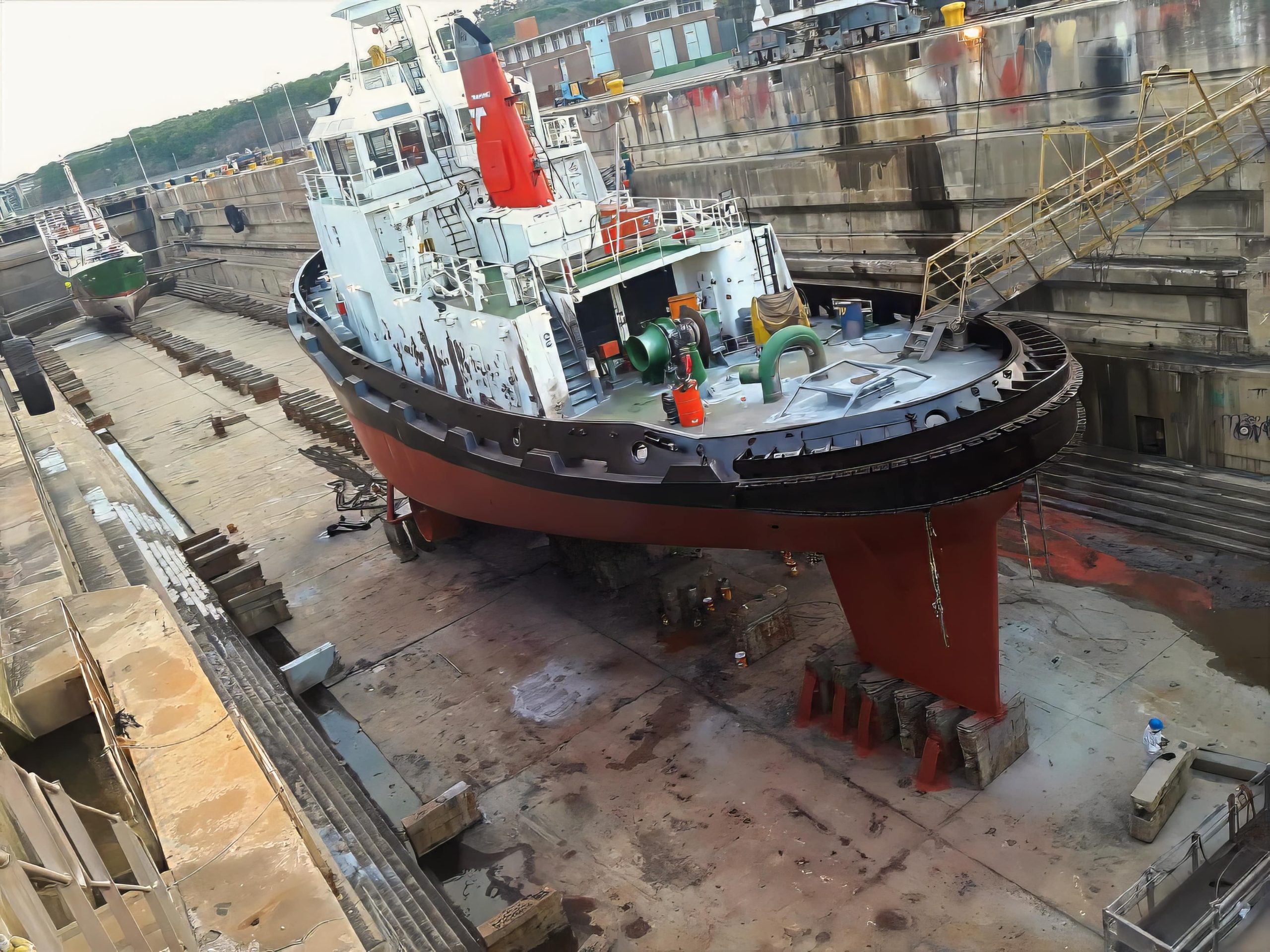


Structural integrity is the foundation of ship safety. With continuous exposure to saltwater, cargo stresses, and fatigue loading, steel hulls undergo gradual material loss through corrosion and erosion. Hull thickness measurements, performed using ultrasonic testing (UT), provide a non-destructive means of assessing plate integrity, ensuring compliance with class society rules and international safety regulations.
In South Africa, these surveys fall under the authority of the South African Maritime Safety Authority (SAMSA) and must comply with the requirements of the International Association of Classification Societies (IACS), as well as individual class societies such as DNV, Lloyd’s Register, ABS, and Bureau Veritas.
Technical Procedures
1. Preparation and Safety Controls
Before commencing UT surveys, detailed planning and environmental controls are implemented.
- Survey Scope: Areas identified by class societies (cargo tanks, ballast tanks, waterlines, and stress concentration zones).
- Access Solutions: Rope access, scaffolding, or cherry pickers deployed per SAMSA safety codes and ILO guidelines.
- Surface Preparation: Removal of scale, coatings, and marine growth to ensure reliable signal transmission.
2. Ultrasonic Testing (UT) Methodology
UT is a non-destructive testing (NDT) technique using high-frequency sound waves to measure steel thickness.
- Probe & Couplant: A transducer with gel or glycerine couplant ensures proper wave transmission.
- Pulse-Echo Principle: Sound waves reflect off the back wall of the plate, with return time converted into thickness readings.
- Accuracy: Readings are typically accurate to ±0.1 mm, making UT the global standard for hull gauging.
- Automation: Advanced UT systems can be paired with digital data loggers and 3D hull mapping software.
3. Class Society Requirements
Hull thickness surveys are tightly regulated to ensure safety and compliance.
- Special Surveys: Conducted every 5 years, with extensive UT required in cargo/ballast tanks and structural members.
- Intermediate Surveys: Selective UT required mid-cycle, targeting high-risk areas.
- Condition of Class (CoC): If UT shows excessive wastage beyond class limits (typically 10–25% reduction), renewal steel work is mandated.
- Reporting: UT readings must be logged in class-approved formats, signed by certified NDT Level II/III technicians.
4. Critical Structural Zones
Certain areas are particularly prone to wastage and always prioritized:
- Waterlines & Splash Zones: Exposed to alternating wet/dry corrosion cycles.
- Ballast & Cargo Tanks: Subject to aggressive chemical/abrasive conditions.
- Double Bottoms: High stresses and potential for pitting.
- Deck Plating & Sheer Strakes: Areas of tensile stress and wave impact.
5. Integration with Repairs
UT findings directly inform steel renewal and repair strategies.
- Crop & Renew: Corroded steel cut out and replaced with class-approved steel grades (e.g., AH36).
- Welding: Per AWS D1.1 / IACS guidelines, maintaining original strength.
- Coating Renewal: Application of protective coatings post-repair to prevent recurrence.
- Digital Records: Thickness trends tracked over time to predict corrosion rates and optimize maintenance cycles.
Conclusion
Hull thickness measurement and ultrasonic testing are non-negotiable safety practices in ship management. They provide early detection of material wastage, prevent catastrophic failures, and ensure compliance with SAMSA, IMO, and class society regulations.
For shipowners, accurate UT surveys mean reduced risk, better lifecycle management, and uninterrupted trading capability. As corrosion never sleeps, precision hull gauging is the first line of defense in safeguarding both vessel and crew.