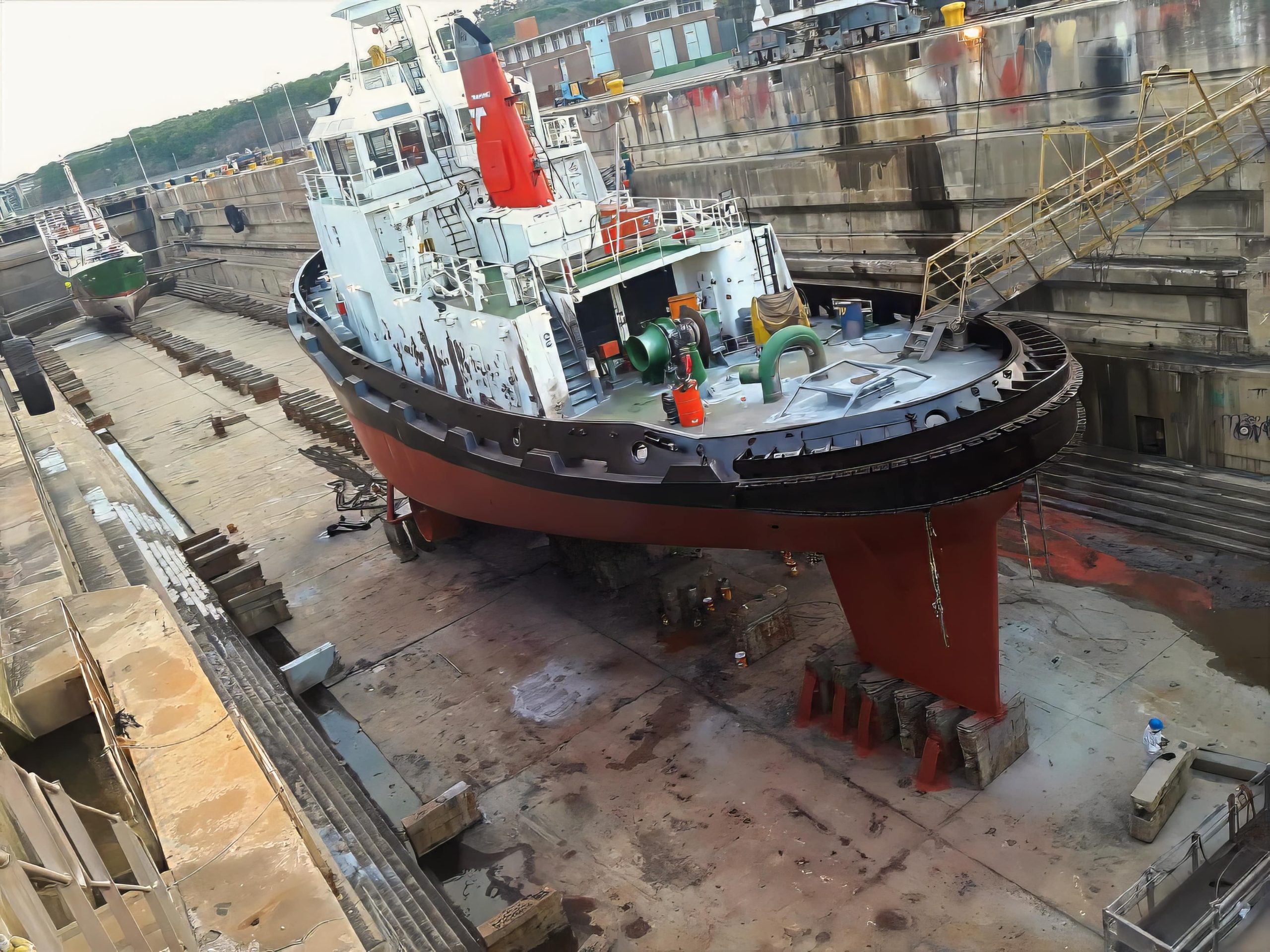

Abrasive blasting is a cornerstone of surface engineering, providing controlled cleaning, surface profiling, and preparation for high-performance coatings. In marine, offshore, and industrial applications, proper surface preparation ensures coating adhesion, corrosion protection, and structural longevity. Abrasive blasting is not simply “cleaning”—it is a precision engineering process governed by international and South African standards, including ISO 8501-1, SANS 1051, and classification society requirements for ships and offshore structures.
Choosing the right abrasive and blasting method depends on substrate type, coating requirements, environmental conditions, and safety regulations.
Common Abrasive Blasting Media
1. Grit (Aluminum Oxide, Silicon Carbide, and Garnet Variants)
Grit abrasives are angular, hard particles suitable for aggressive cleaning and profile creation.
- Aluminum Oxide: High hardness, reusable, and widely used for steel plate preparation before high-performance coatings.
- Garnet: Naturally occurring mineral with excellent cutting efficiency and minimal dust generation; commonly used in marine and industrial surface prep.
- Profile Control: Produces surface roughness (Ra) suitable for epoxy and polyurethane coatings (typically 50–100 µm).
- Advantages: High productivity, precise control of profile, low risk of substrate deformation.
2. Steel Shot / Steel Grit
Steel abrasives are spherical or angular, designed for preening, cleaning, and surface scaling.
- Steel Shot: Rounded particles used for surface preening to increase fatigue strength, ideal for hull plating, structural steel, and pipelines.
- Steel Grit: Angular for aggressive cleaning and profile creation, similar to traditional grit but reusable.
- Applications: Tank bottoms, ship hulls, offshore platforms, and pressure vessel prep.
- Benefits: Minimal dust generation, can be recycled multiple times, imparts compressive stress improving substrate fatigue resistance.
Abrasive Blasting Methods
1. Dry Abrasive Blasting
- Process: High-pressure air propels abrasive media against the surface.
- Equipment: Portable or fixed blast pots, air compressors, blast nozzles.
- Applications: Steel hulls, tanks, structural steel.
- Considerations: Requires containment to control dust; dry blasting is highly effective but generates airborne particulate.
2. Wet Abrasive Blasting (Slurry / Hydro blasting)
- Process: Abrasive is suspended in water and propelled at the surface.
- Advantages: Reduces dust, suppresses static, and cools the substrate.
- Applications: Salt-contaminated surfaces, bridges, and environmentally sensitive areas.
- Considerations: Requires water drainage and containment; may increase cleanup time.
3. Vacuum / Contained Abrasive Blasting
- Process: Abrasive blasting is performed in a sealed chamber with vacuum recovery.
- Applications: Indoor or confined-space blasting, preservation projects, or areas with environmental restrictions.
- Advantages: Recycles media, reduces waste, and improves operator safety.
Surface Profile and Measurement
A key technical requirement in abrasive blasting is surface roughness and cleanliness:
- ISO 8503-1 / ISO 8501-1: Defines standard cleanliness levels (Sa 2, Sa 2.5, Sa 3).
- Profile Measurement: Depth typically 50–100 µm for steel substrates to ensure optimal adhesion of epoxy or polyurethane coatings.
- Verification Tools: Replica tape, surface comparators, and laser profilometers for precise control.
Safety and Compliance
Abrasive blasting is highly regulated due to dust, high velocity particles, and noise:
- Personal Protective Equipment (PPE): Respirators, blast helmets, protective suits, gloves, and hearing protection.
- Occupational Health & Safety Act (1993): Governs dust exposure, confined space operation, and blast media handling.
- Environmental Controls: Containment, vacuum recovery, and water suppression methods to minimize environmental impact.
- SAMSA & Classification Society Requirements: For marine and offshore applications, blasting procedures must comply with class survey and coating standards.
Conclusion
Abrasive blasting is a technical, precision-driven process that prepares surfaces for long-term protection and performance. Choosing the right media (grit, garnet, steel shot), method, and profile specification ensures that coatings adhere properly, corrosion is minimized, and structural integrity is preserved.
For marine, offshore, and industrial operators, controlled abrasive blasting is not just maintenance—it is engineering at the interface of metallurgy, coatings science, and operational safety, delivering decades of asset longevity and compliance with international and South African standards.